
LPC Conference plans pharmacy’s path in NHS transformation
Local pharmacy leaders from across the country met to discuss critical issues and consider ways to secure community pharmacy’s place in plans to develop the health service.
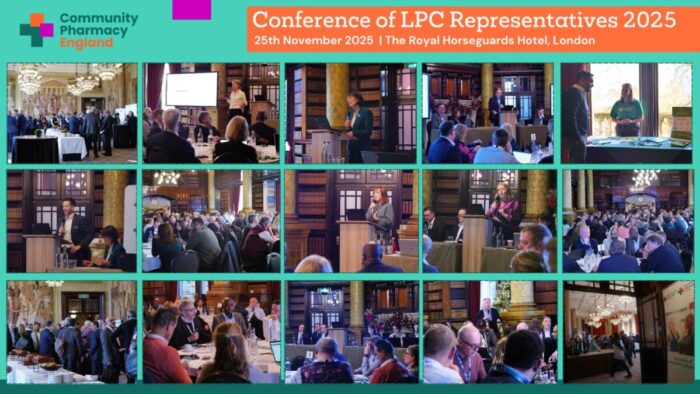
The Annual Conference of LPC Representatives held last week considered important topics for the coming year with speakers sharing insights on the 10 Year Health Plan, healthcare networks, and what next for community pharmacy. The event was attended by delegates representing 49 out of the 50 LPCs in England.
Central to the day was a series of LPC-led discussion sessions, based on topics submitted by Community Pharmacy England regions of LPCs, that sparked in-depth conversations where delegates shared information and ideas. Delegates examined the future of Independent Prescribing and explored LPC activities of direct benefit to pharmacy owners, as well as considering negotiations and potential improvements to the Community Pharmacy Contractual Framework (CPCF).
Conference discussed and offered views on the future commissioning of Community Pharmacy Prescribing Service, including what they would like to see in a nationally commissioned service, which there was strong support for. Delegates were concerned about the affordability from within the CPCF, with 99% voting to agree that funding should not be from the existing global sum but from new investment.
During her keynote speech, Dr Amanda Doyle OBE, NHS England’s National Director for Primary Care and Community Services, urged the community pharmacy sector to cement its core role in healthcare delivery as the 10 Year Health Plan drives a shift towards preventative, patient-centred care.
Dr Doyle acknowledged the progress already made with the rollout of new clinical services and described pharmacist prescribing as a potential “game changer”, but called for greater use of automation and support staff to free up pharmacists. Emphasising the need for pharmacists to be embedded in Neighbourhood Health Teams without stripping talent from community settings, she highlighted the importance of integration. “Pharmacy needs a voice at the table locally. Without that, we’ll miss a trick,” she stressed, urging LPCs to facilitate representation in planning discussions and GP-pharmacy collaboration.
However, Dr Doyle also noted the sector’s financial fragility, adding that while this year’s funding uplift is the largest in the NHS, it may not feel like it. She said NHS England acknowledges the issue and is committed to supporting the sector.
The day’s other key speaker, Community Pharmacy England CEO Janet Morrison, also emphasised the need to stabilise the sector’s finances before it can fully support NHS ambitions. However, referencing a recent meeting with the Pharmacy Minister, Janet spoke of the Government’s tight spending limits, meaning tough choices ahead.
Acknowledging the sector felt stung by the previous multi-year settlement, Janet indicated that a one-year deal is expected this time, which seems prudent given the need to continue to influence 10 Year Plan developments. Negotiation principles have been shaped through sector workshops and input from pharmacy bodies, with Janet vowing to fight for concessions even if the offer presented disappoints: “If you can’t do this, then sort that.”
Elsewhere on the agenda, LPCs heard insights from Professor Becky Malby from The York Management School on making the most of healthcare networks, and the Community Pharmacy Workforce Development Group shared their priorities for 2026, including plans for greater engagement with LPCs.
There was also time for delegates to put their questions to Community Pharmacy England’s Leadership Team, and the event concluded with a rapid reflection and planning session, encouraging attendees to translate conference learnings into actionable steps. From Community Pharmacy England’s side, all of the feedback from the day will help us prioritise our workstreams for the coming months.
Stakeholder reception
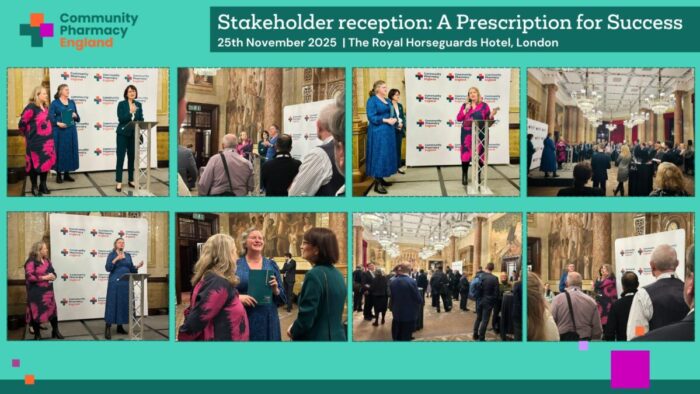
The conference was followed by a stakeholder reception to launch A Prescription for Success, with LPCs joined by NHS policy leads, health charities, think tanks, pharmacy and wider primary care professionals, and patient representatives. Opening remarks were made by report author and Chair of National Voices Helen Buckingham plus Community Pharmacy England’s Chair Professor Dame Jenny Harries and CEO Janet Morrison.
A Prescription for Success demonstrates the areas of alignment between the 10 Year Health Plan and the community pharmacy sector’s own ambitions for the future. This builds on the Vision for Community Pharmacy, which described how pharmacies can help to address key policy goals around population health, prevention and the increasing demand in primary care.
Attendees at the stakeholder event heard about the key questions that must now be addressed to enable community pharmacies to help deliver the Government’s proposals for a future-fit NHS, which are centred around coordinated action to develop and support the sector.
James Wood, Director of LPC and Pharmacy Owner Support at Community Pharmacy England, said:
“The Annual Conference of LPC Representatives is an important opportunity to spend time discussing strategic issues and ideas with our network of brilliant local leaders. I’m always encouraged by the amount of great work going on across the regions and the and I’m pleased to give LPCs a platform to share that best practice, working with a Conference Working Group to shape the event.
This year’s Conference was particularly significant as it marked a turning point for community pharmacy in shaping its role within the NHS’s long-term transformation. With the 10 Year Health Plan driving a shift towards preventative, patient-centred care, community pharmacy must be fully integrated into neighbourhood health teams and local planning discussions.
The event brought together representatives from across the country for in-depth conversations on independent prescribing, neighbourhood integration, and service optimisation. Delegates overwhelmingly agreed that independent prescribing must have its own dedicated funding stream, underlining the sector’s determination to ensure new clinical services are properly resourced.
The conference also identified the top priorities for LPCs in 2026: negotiating local funding opportunities, supporting neighbourhood development and integration, and optimising services. These insights will directly inform Community Pharmacy England’s works in the months ahead.
We heard loud and clear that financial stability remains the foundation for progress. While the NHS faces tight spending limits, Community Pharmacy England will continue to fight for fair funding and capacity-releasing measures in upcoming negotiations. Our goal is to secure the resources and recognition pharmacies need to play a central role in delivering high-quality, accessible care for communities across England.”
Mike Hewitson, Chair of Community Pharmacy Dorset and Community Pharmacy England Committee Member, said:
“This year’s LPC Conference was the best I’ve experienced. The sessions on neighbourhood integration and service optimisation were very valuable, and the chance to share ideas with colleagues from across the country was inspiring. Independent prescribing came through strongly as a game changer for the sector, but we all agreed it needs proper funding to succeed. I left feeling optimistic that, with the right support and representation, community pharmacy can truly cement its place in the NHS’s future plans.”